
Pinot Noir
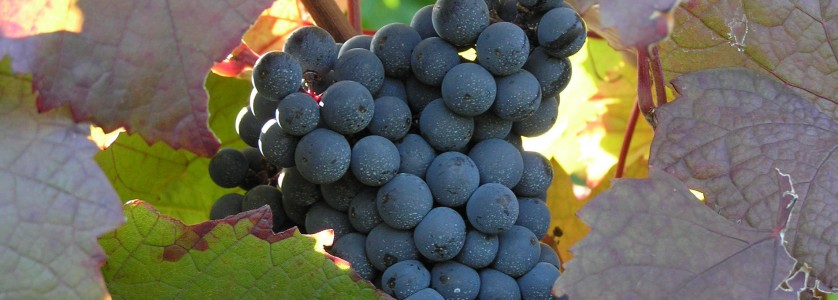
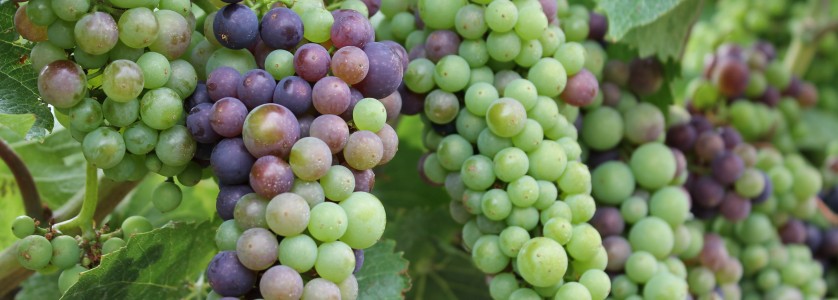
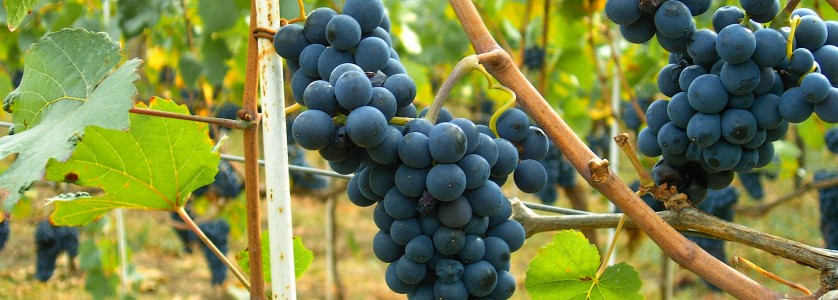
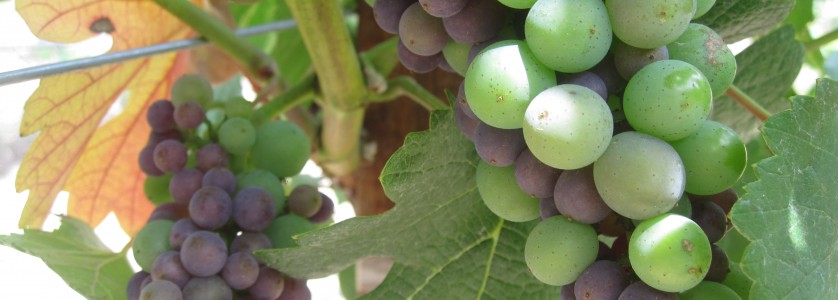
Pinot Noir is a black wine grape variety. The name allude to the grape variety's tightly clustered dark purple pine-cone shaped bunches of fruit. The variety was known and cultivated in Burgundy from the times the Romans invaded Gaul, the last century BC.
Pinot Noir is a black wine grape variety of the species Vitis vinifera. The name may also refer to wines created predominantly from Pinot Noir grapes. The name is derived from the French words for pine and black; the pine alluding to the grape variety having tightly clustered, pine cone-shaped bunches of fruit. Pinot noir grapes are grown around the world, mostly in the cooler regions, but the grape is chiefly associated with the Burgundy region of France. It is widely considered to produce some of the finest wines in the world, but is a difficult variety to cultivate and transform into wine.
Pinot noir is almost certainly a very ancient variety that may be only one or two generations removed from wild, Vitis sylvestris, vines. Its origins are nevertheless unclear: In De Re Rustica, Columella [1] describes a grape variety similar to Pinot Noir in Burgundy during the 1st century AD, known from when the Romans invaded Gaul. However, vines have grown wild as far north as Belgium in the days before phylloxera, and it is possible that Pinot represents a direct domestication of (hermaphrodite-flowered) Vitis sylvestris. It’s preeminence as the hallowed grape of the Côte d’Or dates from 1395, when Duke Philippe the Bold banned plantings of Gamay in favour of Pinot Noir.
For years, grapevine varieties have been identified by physical features of their leaves and fruit. But those traits can vary according to environmental conditions. In the 1990s DNA fingerprinting, which compares characteristic patterns in the genetic material of a plant, animal or human, proved to be a highly accurate way to identify grapevine varieties no matter where they are growing. In 1997 University of California at Davis reported they had developed genetic fingerprints for 51 wine grape varieties, including Cabernet Sauvignon. They crushed young grapevine leaves from each of the varieties, extracted DNA from the leaves and examined distinct DNA sites known as ‘microsatellite’ markers that differed from the surrounding DNA in chemical makeup. They then used statistical analysis to determine the likelihood of the Cabernet Sauvignon microsatellite fingerprint deriving from the fingerprints of any two of the other varieties. These analytical methods pointed to Cabernet Franc and Sauvignon Blanc, as being the genetic parents of Cabernet Sauvignon.
Expanding on that work, the researchers enlisted the collaboration of French colleagues. After reviewing the historical French literature on wine grapes and taking into account previous speculation on variety origins, they chose 300 varieties from among the more than 2,000 maintained in a collection near Montpellier, France, by the Institute National de la Recherche Agronomique. In France, leaf samples were taken from the 300 varieties; DNA was extracted from them, and taken to UC Davis where the DNA fingerprinting technique was used to generate a DNA profile for each variety. They first compared all the varieties at 17 distinct DNA ‘microsatellite’ markers and looked for genetic evidence of close family relationships. Then they chose 60 varieties for more detailed comparisons. Their analysis of these 60 varieties at 17 additional DNA marker sites revealed that 16 of them were probably the offspring of the same pair of parent varieties – an original ‘Pinot’ and Gouais Blanc. A further statistical test, similar to that used to validate human DNA fingerprinting results, confirmed the very high probability that these two varieties were indeed the parents. In 1999 they announced “We are more than 99.99 percent sure that Pinot and Gouais Blanc are the original parents for these 16 varieties (including Chardonnay and Gamay Noir).” In August 2007, French researchers announced the sequencing of the genome of Pinot noir. It is the first fruit crop to be sequenced, and only the fourth flowering plant.
[1] Lucius Junius Moderatus Columella (Gades, Hispania Baetica, AD 4 – ca. AD 70) writer on agriculture of the Roman Empire. Born in Gades (modern Cadiz), from Roman parents. He was Tribune in Syria in 35 AD. His De Re Rustica in twelve volumes has been completely preserved and forms an important source on Roman agriculture, together with the works of Cato the Elder and Varro, both of which he occasionally cites. A smaller book on trees, De Arboribus, is usually attributed to him.