
Muscat of Alexandria
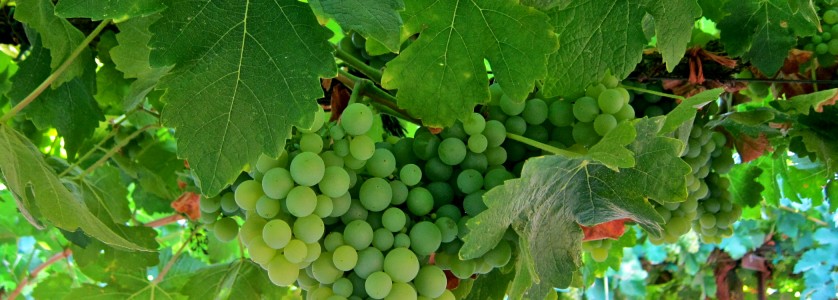
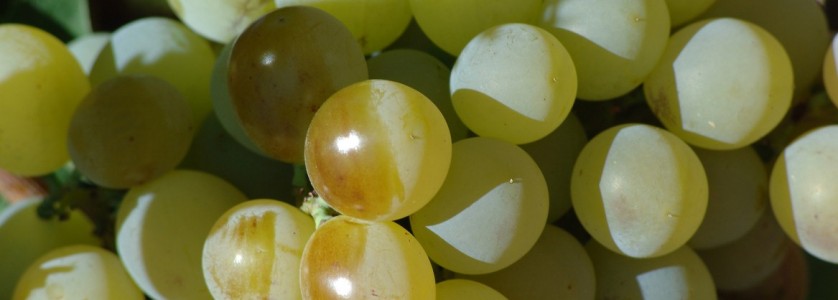
Muscat of Alexandria has the honour of being one of the earliest, primordial forms of vines for both table grapes and wine grapes. The variety originated (as its name suggests) around the ancient city of Alexandria, at the western edge of the Nile Delta in Egypt.
Muscat of Alexandria is a white wine grape that is a member of the Muscat family of Vitis vinifera. It is considered an “ancient vine“, and wine experts believe it is one of the oldest genetically unmodified vines still in existence. While today it is mostly cultivated as a table grape or for raisin production, it is still an important grape in the Australian and South African wine industry. It is also cultivated very heavily on the island of Samos, in the North Eastern Aegean region of Greece, and reputedly Cleopatra drank muscat wine from there. It is also thought to rival the French Beaume de Venise in its most refined form. In Italy wine is made from the grape on the island of Pantelleria, and in Spain, the grape is used for wine around Málaga, Alicante, Valencia, and the Canary Islands. The grape originated in North Africa, and the name is probably derived from its association with Ancient Egyptians who used the grape for table grape, for raisin production and for wine making.
The variety was brought to the Iberian Peninsula by the Phoenicians, who made wine from it. Even during the time of the Islamic occupation it was consumed as table grapes. When Sultan Mehmet II conquered Constantinople in 1453, followed by the annexation of Greece, he put a stop to the so-called Greek wine which was shipped by Venetian merchants to England and Northern Europe. Portugal stepped into the breach, with its similarly sweet wines from Setubal (Anzoy), as did Spain, with wines from Valencia, Taragona, Malaga and Cadiz. Herrera (1511) described this wine and made reference to what Pliny the Elder called Vitis Apiana.