
Carignan
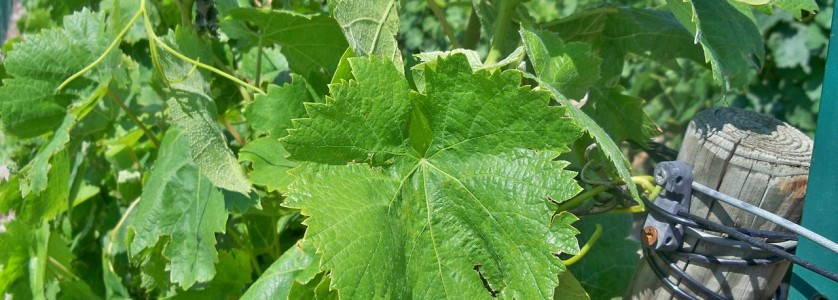
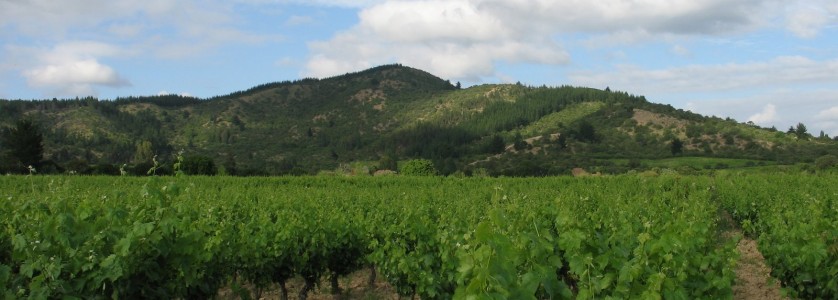
Carignan (Cariñena) is a red Spanish / French wine grape variety from Phoenician origin that was brought first to the island of Sardinia in the IX century BC. Currently Carignan is found throughout the globe with the vast majority of plantings in France.
Carignan (also known as Mazuelo, Bovale Grande, Cariñena and Carignane) is a red Spanish/French wine grape variety that is widely planted throughout the western Mediterranean and across the globe. Along with Aramon, it was once considered one of the main grapes responsible for the large wine production of France and it was also a substantial producer in jug wine production in California Central Valley. Ampelographers believe that the grape likely originated in Cariñena, Aragon and was later transplanted to Sardinia, elsewhere in Italy, France, Algeria, and much of the New World. The varietal was historically a component of Rioja’s red wine blend.
The name Cariñena (Carignan) comes from a village in the province of Zaragoza, in Aragon, Spain, known for its wine and for giving its name to the Cariñena (Carignan) grape. In ancient Roman times it was known as Carae and it was recorded that in the 3rd century BC its inhabitants drank wine mixed with honey. Pliny the Elder, the procurator of Tarraconensis, one the three provinces in Hispania, named this Roman settlement Carae; the suffix -iniana (thus Cariniana) means belonging to. The village Cariniana signified the hamlet and manor situated in the location of Carae and refers to its owner, Carinius. At the end of the second century, a tendency to concentrate the property led to the appearance of the large latifundia whose owners gave their names to places like this.
From Spain, Carignan gained prominence in Algeria and fed that country’s export production to France. Ampelographers do believe that Carignan is likely a very old variety due to its wide spread plantings and the proliferation of numerous different synonyms that give testament to the grape’s long history in different wine regions. However, in Zaragoza and other parts of Catalonia, the grape is sometimes called Samsó which is also used as a synonym for the French wine grape Cinsault adding to confusion to Carignan’s history in the region. Another Spanish synonym, Mazuelo which is used in the Rioja wine region, is believed by ampelographers and wine historians to come from the commune of Mazuela in the province of Burgos in the Castilla and León region of northwest Spain.
Carignan is a late budding and late ripening variety that is often one of the last grapes to be harvested during a vintage. The vine is very vigorous and high yielding, able to easily produce 200 hectoliters/hectare (approximately 10.4 tons/acres), if not kept in check by winter pruning or green harvesting during the growing season. The late ripening nature of the grape means that it rarely achieves full ripeness unless planted in vineyard soils in very warm climates such as the Mediterranean climates where the grape originated in or the hot Central Valley of California. Carginan’s tendency to produce short shoots with clusters that grow closely to the trunk of the vine means that it is difficult variety to harvest mechanically. However, the economy of scale for blending varieties or grapes destined for lower priced box and jug wines often do not work well with the expense and labor cost of hand-harvesting. Among the viticultural hazards that Carignan is susceptible to include powdery mildew and infestation of the vine from grape worms and the European Grapevine Moth. The vine has some slight resistance to the fungal disease of botrytis bunch rot, downy mildew and phomopsis.
Carignan is found throughout the globe with the vast majority of plantings in France, followed by Spain and Italy where it is a permitted grape variety in several Appellation d’origine contrôlée (AOC), Denominación de Origen (DO) and Denominazione di origine controllata (DOC) regions. Elsewhere in Europe and the Middle East, plantings of the grape can be found in Croatia, Cyprus, Malta, Turkey and Israel. In Africa, plantings of Carignan are also found in the north African wine-producing countries of Morocco and Tunisia as well as in South Africa. In the New World, Carignan is planted in several American Viticultural Areas (AVA)s of the United States, particularly in California and Washington State. Elsewhere in North America, plantings of the grape can be found in Mexico. In South America, Carignan is planted in Argentina, Chile and Uruguay. In recent years, plantings of the grape have slowly increased in China as well as in Australia.