
Alicante Bouschet
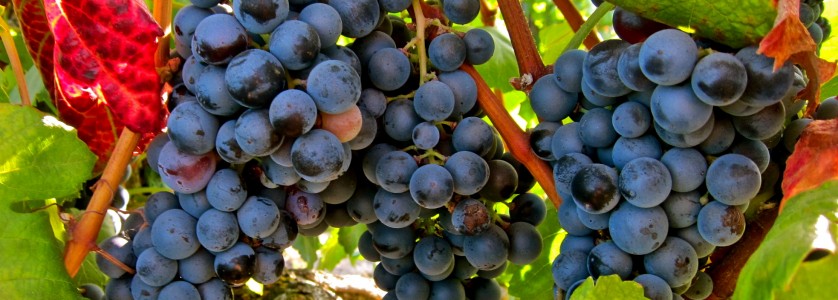
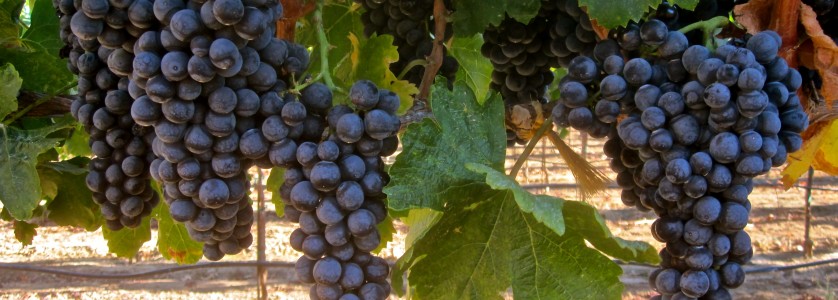
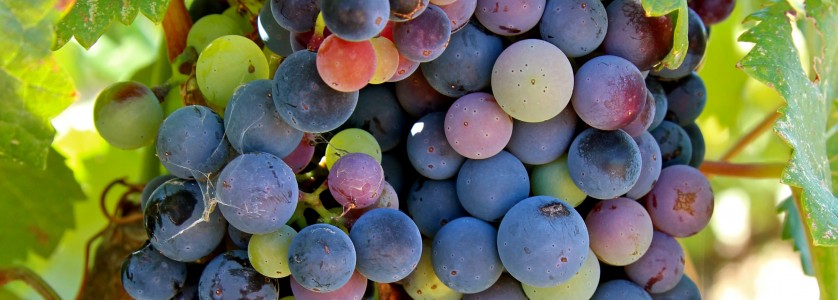
Alicante Bouschet is a teinturier grape variety widely planted in France, particularly in the Languedoc-Roussillon region, as well as in Spain and Portugal, and, to a lesser extent, in parts of Italy, Israel, Macedonia, North Africa, Chile and California. The variety was originally cultivated in France in 1866 by Henri Bouschet, son of the creator, as a cross of Petit Bouschet and Grenache.
Alicante Bouschet or Alicante Henri Bouschet is a wine grape variety that has been widely cultivated since 1866. It is a cross of Petit Bouschet (itself a cross of the very old variety Teinturier du Cher and Aramon) and Grenache. Alicante is a teinturier, a grape with red flesh. It is one of the few teinturier grapes that belong to the Vitis vinifera species. Its deep colour makes it useful for blending with light red wine. It was planted heavily during Prohibition in California for export to the East Coast. Its thick skin made it resistant to rot during the transportation process. The intense red colour was also helpful for stretching the wine during prohibition, as it could be diluted without detracting from the appearance. At the turn of the 21st century, Alicante Bouschet was the 12th most planted red wine grape in France with sizable plantings in the Languedoc, Provence and Cognac regions.
The grape was first cultivated in France in 1866 by Henri Bouschet as a cross of Petit Bouschet and Grenache. The Petit Bouschet grape was created by his father Louis Bouschet. The result was to produce a grape with deep colour grape of higher quality than the Teinturier du Cher. Several varieties of Alicante Bouschet were produced of varying quality. The grapes high yields and easy maintenance encouraged its popularity among French wine growers, especially in the years following the Phylloxera epidemic. By the end of the 19th century there were Alicante Bouschet plantings in Bordeaux, Burgundy, Loire Valley and Alentejo in Portugal.
The grape was widely popular in the United States during the years of Prohibition. Grape growers in California’s Central Valley found that the grape’s pulp was so fleshy and juicy that fermentable juice could be retrieved even after the third pressing. In contrasts, wines made grapes like Chardonnay and Merlot typically only include the juice from the free run (before pressing) and first or second pressing. The grape’s thick skin also meant that it could survive the long railway transportation from California to New York’s Pennsylvania Station which had auction rooms where the grapes were sold. In 1928, one single auction lot of 225 carloads of grapes was purchased by a single buyer. The amount of grapes was enough to make more than 2,000,000 US gallons (7,600,000 L) of wine planted red wine grape in France with sizable plantings in the Languedoc, Provence and Cognac regions. The grape is known for its deep dark colour, more than 15 times the colour of Aramon and twice the darkness of the Grand Noir de la Calmette. The grape produces high yields, an average of 80 hl/ha. It buds and ripens early to produce wines often with alcohol levels around 12%. The wines produced by the grape alone typically aren’t of the highest quality and tend to be flabby, lacking character and complexity. The grape vine is prone to grape diseases like anthracnose and downy mildew. The grape leaves of the vine are unique in that they have patches of purple colouring.